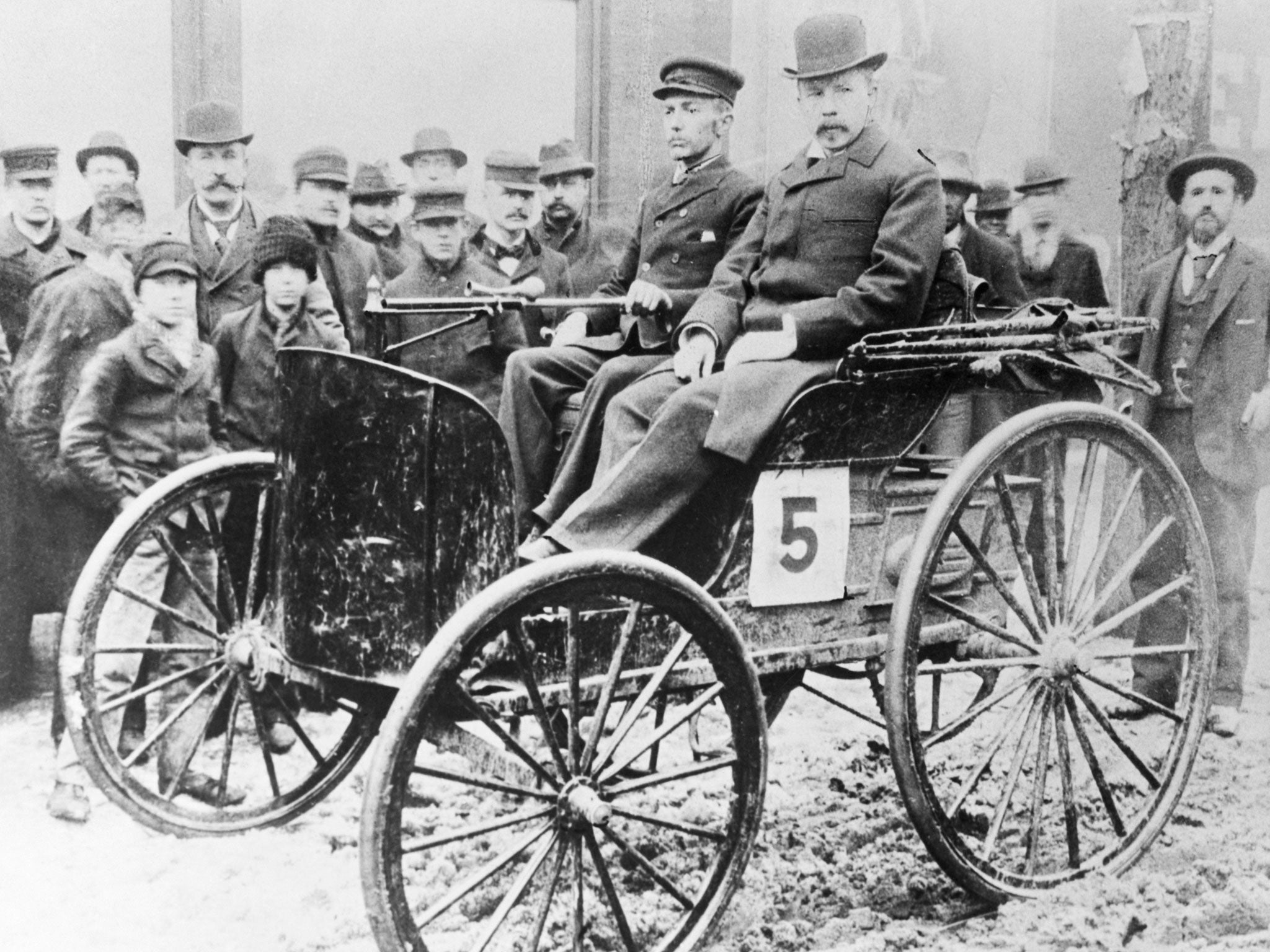
Duryea Motor Wagon - The First American Car & Who Built it


The first car made in the United States was the Duryea Motor Wagon, which was built by Charles and Frank Duryea in 1893. The Duryea Motor Wagon was a one-off prototype built in Springfield, Massachusetts, and it was based on a design by Charles Duryea. The Duryea Motor Wagon was powered by a single-cylinder gasoline engine and had a top speed of around 15 miles per hour. It was the first successful gasoline-powered vehicle built in the United States, and it paved the way for the development of the modern automobile industry in the country.
The Duryea Motor Wagon was a buggy equipped with a 2-cylinder engine that cost around $70.

It was road-tested in November of that year and received widespread attention from the media. After its initial test, the Duryea Motor Wagon was put into storage until 1920, when it was rescued by Inglis M. Uppercu and presented to the United States National Museum. The Duryea Motor Wagon was entered into several shows and races, and it achieved a number of notable victories. In 1896, it won first place in the first-ever American automobile race, the Times-Herald race, and it also won first and second place in the Cosmopolitan Race on Decoration Day in New York City. The Duryeas also participated in the Procession/Race from London to Brighton England on November 14, 1896.

So Did USA invent the car?

The automobile, as we know it today, was not invented in the United States. The concept of a self-propelled vehicle dates back to ancient times, and there were many attempts to build practical and reliable automobiles in the centuries that followed. However, the modern automobile, with its internal combustion engine and other essential features, was developed in Europe in the late 19th century. The first successful gasoline-powered vehicle was built by Karl Benz in Germany in 1885, and the first mass-produced automobile was the Ford Model T, which was introduced in 1908. The Model T was designed and built by Henry Ford in the United States, and it revolutionized transportation and changed the way people lived and worked. However, the automobile had already been in existence for more than 20 years by the time the Model T was introduced, and it was not a completely new invention. That being said, the United States played a significant role in the development and mass production of automobiles, and it is now home to many of the world's leading automakers and suppliers. The automobile industry has contributed significantly to the country's economic growth and global influence, and it continues to be an important part of the American economy.

Comments

Popular posts from this blog

How High Glucose Levels Damage Blood Vessels: Understanding the Mechanisms

Blood vessels play a crucial role in the body, delivering oxygen and nutrients to organs and tissues and removing waste products. However, when glucose levels in the bloodstream are chronically high, blood vessels can be damaged in various ways. This damage can lead to a range of complications associated with diabetes, including cardiovascular disease, retinopathy, and kidney damage. In this article, we will explore how high glucose levels can damage blood vessels through processes such as glycation, oxidative stress, and advanced glycation end product (AGE) accumulation. By understanding these mechanisms, we can better appreciate the importance of controlling blood glucose levels to prevent or minimize complications associated with diabetes. The Process of Glycation Glycation is a chemical process that occurs when glucose molecules bind to proteins and lipids in the blood vessel walls. This process is also known as non-enzymatic glycosylation, and it happens naturally in the body to s...

The Nutritional Benefits of Liver: Why You Should Consider Adding it to Your Diet

When it comes to nutritious foods, liver might not be the first thing that comes to mind. In fact, many people are hesitant to eat liver due to its strong flavor and reputation as a "gross" or "weird" food. However, liver is actually an incredibly nutritious food source that has been consumed by humans for thousands of years. It's rich in several vitamins and minerals that are essential for good health, including vitamin A, vitamin B12, iron, copper, and zinc. The Health Benefits of Liver Liver is a true superfood when it comes to its nutritional profile. Here are just a few of the health benefits of incorporating liver into your diet: High in Vitamin A: Liver is one of the best food sources of vitamin A, which is important for vision, immune function, and skin health. A 3-ounce serving of beef liver contains over 500% of the daily value (DV) for vitamin A! Rich in Vitamin B12: Vitamin B12 is essential for energy production, red blood ...

The Incredible Diversity of Human Cell Sizes: Why Size Matters

  Did you know that human cells can range in size from as small as 7 micrometers to as large as 100 micrometers? That's a huge difference in scale, especially considering that all of these cells are part of the same organism! But why do cells vary so much in size, and what implications does this have for their function? In this blog post, we'll explore the fascinating world of human cell sizes and discover why size really does matter when it comes to these microscopic building blocks of life. What determines cell size in humans? Cell size can vary greatly depending on the type and function of the cell. Some cells, such as egg cells, are much larger than others, like red blood cells. Factors that influence cell size include the amount of cytoplasm, the size and number of organelles, and the thickness of the cell membrane. For example, muscle cells are larger than most other types of cells because they contain many mitochondria, which are organelles responsible for generating e...